01
What's Causing Your Clogged Drain?
hair cloggrease buildupP-trap
The cause of a clogged drain almost always comes down to fixture type, and identifying it early is the best way to unclog pipes efficiently.
Bathroom drains accumulate hair clogs within 3 to 6 inches of the opening, while kitchen lines suffer from grease buildup that coats pipe walls over months. The P-trap — the curved section directly beneath every sink — is the second most common blockage point, trapping food, soap scum, and debris in its bend. Outdoor and utility drains collect leaves and sediment. Knowing which pattern matches your fixture lets you clean a sink drain or clear a clogged drain with the right tool the first time, rather than guessing.
02
How Do You Unclog a Shower, Tub or Bathroom Sink?
plungerdrain snakehair clog
The best way to unclog a shower drain or bathtub drain starts with removing the drain cover and pulling out visible hair by hand or with a small hook — most hair clogs sit within the first 4 inches.
If the bath tub drain is still clogged after that, seal a cup plunger firmly over the opening and pump it 15 to 20 times with consistent pressure. To unclog a bathroom sink, the same plunger technique works, though blocking the overflow hole with a wet cloth first improves suction. When plunging fails, a hand-held drain snake — inserted 18 to 36 inches — physically breaks up and retrieves what's blocking the pipe. Avoid pouring boiling water into PVC lines; 140°F is the safe maximum.
03
How Do You Unclog a Kitchen Sink or Dishwasher?
garbage disposalair gapgrease trap
A blocked kitchen drain usually traces back to one of three sources: accumulated grease in the line, a jammed garbage disposal, or a clogged air gap on the dishwasher.
To unclog a kitchen sink, first run the disposal for 30 seconds with cold water flowing — dislodged debris is the culprit about 40% of the time. If dishwasher water is not draining, check the air gap cylinder on your countertop; compacted food particles block it completely in under a year without cleaning. A grease trap beneath a kitchen sink can also reach capacity and back flow into both the sink and dishwasher drain lines simultaneously. For persistent blockages, snaking past the P-trap clears grease buildup that hot water alone won't shift.
04
Chemical Drain Cleaner vs. Professional Snaking: Which Works?
enzyme cleanerdrain cablePVC pipe
The best drain opener for a one-time clog depends on pipe material and clog type.
Drain cleaning foam and drain cleaning acid products dissolve organic matter within 15 to 30 minutes, but drain cleaner cost adds up fast — and repeated use of a chemical drain cleaner degrades PVC pipe joints and corrodes older iron fittings. Enzyme cleaner options work safely on grease over 6 to 8 hours but won't cut through a compacted hair blockage. A drain cable or drain cleaning cable operated by a professional reaches 25 to 75 feet into the line and physically removes the obstruction — no chemical residue left behind. A drain cleaning gun (hydro-jetter) is the strongest mechanical option, flushing grease-coated pipes at 1,500 to 4,000 PSI. Snaking wins on safety and long-term cost.
05
How Do You Fix a Blocked Outdoor or Septic Drain Line?
outdoor cleanouttoilet augerseptic line
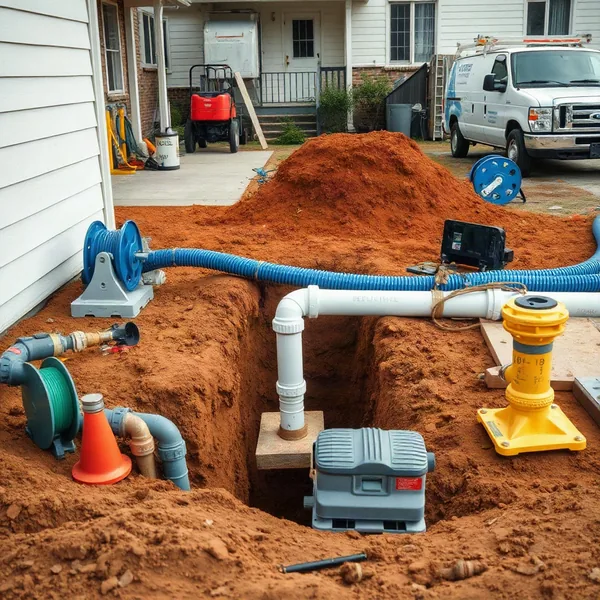
Blocked drain services for outdoor lines start at the outdoor cleanout — a capped pipe usually near the foundation that gives a plumber direct access to the main sewer run.
To unclog an outdoor drain or address a septic line backup, a plumber inserts a drain snaking cable 50 to 100 feet to break through root intrusion or compacted debris. For toilet bowl clogs that resist a standard plunger, a toilet auger reaches 3 to 6 feet into the trap without scratching the porcelain. Septic line blockages are a separate concern: disturbing the distribution field without knowing tank capacity or last pump date can cause a $2,000 to $6,000 repair. Always request drain snaking near me from a plumber who confirms septic compatibility before clearing the main line.
06
What Drain Cleaner Should I Use and Why?
enzyme cleanerchemical cleaner
Choosing between an enzyme cleaner and a chemical cleaner comes down to how fast you need results and what your pipes are made of.
Enzyme cleaner — brands like Bio-Clean or Green Gobbler Enzyme — breaks down grease and organic waste biologically over 6 to 8 hours. It's safe for septic systems, PVC, copper, and cast iron. A chemical cleaner like Drano Max Gel acts in 15 to 30 minutes but contains sodium hydroxide or sulfuric acid, which weaken pipe seals with repeated use and create dangerous fumes in enclosed spaces. For hair clogs, neither dissolves the blockage completely — mechanical removal with a drain snake remains the most reliable solution. Use chemical cleaners as a one-time measure, never as a monthly habit.
07
How Much Does Clogged Drain Repair Cost?
service call feefixture drain
A standard clogged drain repair visit in Bullhead City typically runs between $100 and $250 for a single fixture drain — covering the service call fee, diagnosis, and snaking.
Main line clogs, which sit deeper than a standard branch line, raise that range to $250 to $500. Hydro-jetting a grease-heavy line costs $300 to $600. Emergency after-hours calls add a $50 to $150 surcharge on top of labor. Camera inspection to locate a stubborn blockage adds another $100 to $250. Most straightforward clogged drain fix jobs on a single fixture drain — shower, tub, or sink — are completed within 30 to 90 minutes. Getting a written quote before work starts is standard practice among every plumber in our network.